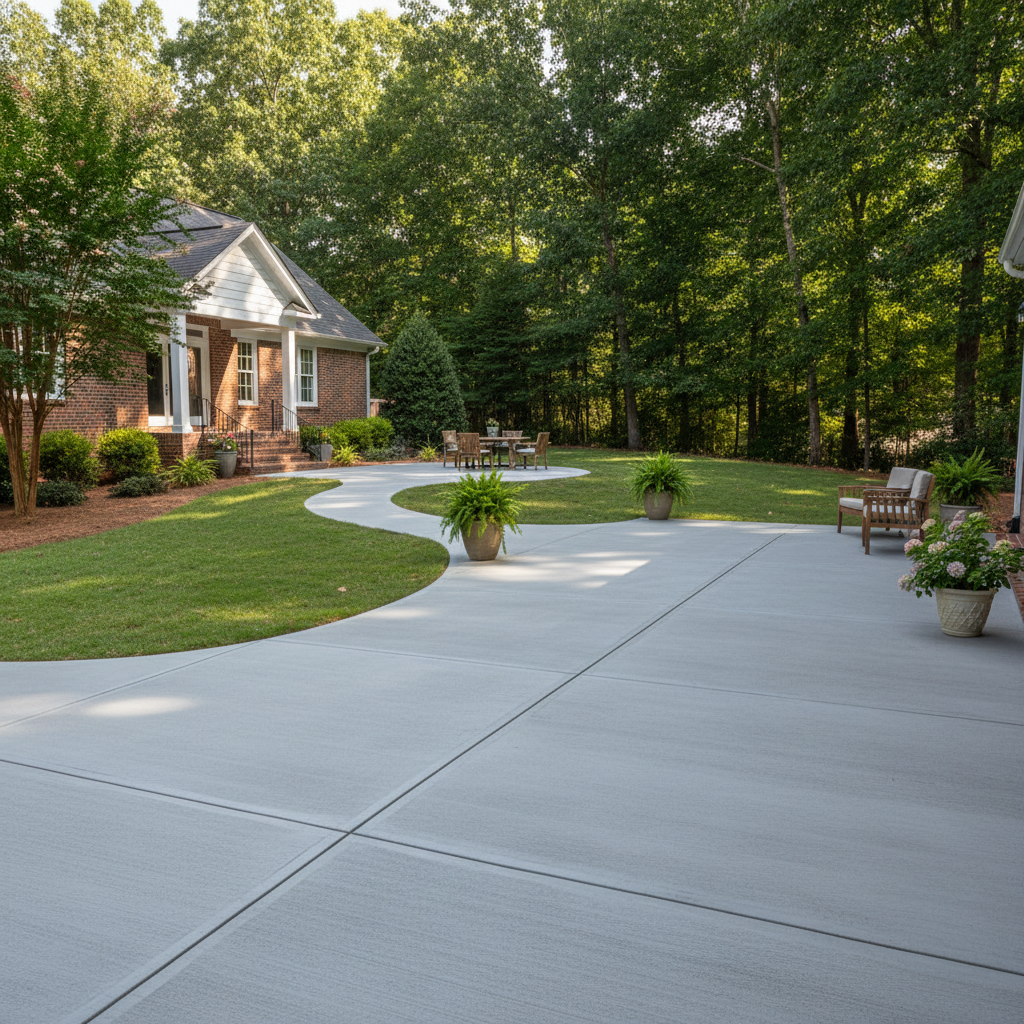
Concrete driveways around Five Points can look pristine for decades or start flaking after just a few years. The difference usually comes down to timing and how well the work respects our local climate. Here in Athens, GA, we deal with intense summer humidity, sudden afternoon downpours, and stubborn red clay that shifts when wet. Knowing how these elements affect concrete can save you from a costly headache down the road.
Beating the Heat and Humidity
Summer pours here are very demanding. When the temperature climbs and the air holds high humidity, concrete sets up much faster than you want it to. That rapid curing can trap moisture and cause ugly surface cracking. Kingdom Concrete Athens usually aims for early morning starts during July and August to get ahead of the heat. If you are planning a new patio or slab, summer is completely doable, but you need a crew that knows how to adjust mix designs and use evaporation retardants so the surface does not dry out before it is finished.
Choosing the Right Window
Spring and fall are often considered the best times for flatwork and structural pours in Northeast Georgia. The weather is milder, and we avoid the extreme temperature swings that stress fresh concrete. That said, spring brings frequent rain showers that can catch you off guard. A sudden downpour on a fresh pour will wash the cement paste right off the top and leave you with weak, sandy aggregate exposed to the elements. If rain is looming, a good contractor will reschedule rather than gamble with your property.
Protecting Your Investment Year-Round
Once your concrete is cured, your job does not end completely. Our local clay soil expands and contracts heavily depending on the season, putting stress on slabs and foundations. Here are a few simple ways to keep your concrete healthy:
- Seal your exterior concrete every couple of years to block out moisture and winter frost.
- Keep drainage clear around your slabs so water does not pool against the edges and erode the sub-base.
- Wash away organic debris like fallen leaves and pine needles, which can stain the surface and trap moisture against the concrete.
Taking care of your concrete does not have to be a full-time job. Pay attention to the weather when planning your next project, keep up with basic maintenance, and your investment will easily handle whatever Georgia weather brings.