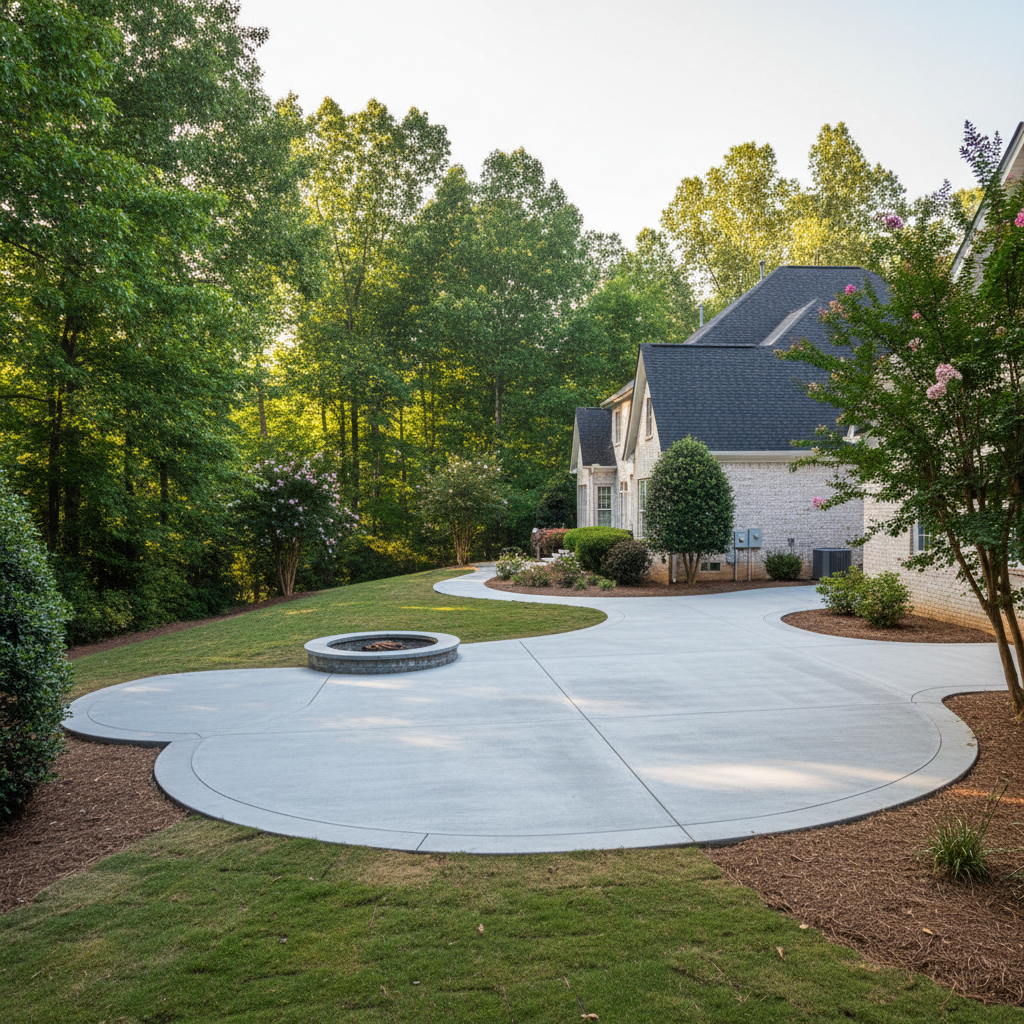
Look, if you live in Athens, Georgia, you know our weather is not always predictable. That goes double when you are thinking about concrete flatwork like a driveway, a patio, or a sidewalk for your Athens home. You can not just pour concrete whenever you feel like it and expect it to last. The local climate here in Athens plays a huge role in how long your concrete will hold up, and I have seen plenty of folks make mistakes that could have been avoided with their concrete flatwork in Athens.
I am not talking about just a little rain shower. I am talking about our scorching summers here in Athens, the sudden downpours, and those sneaky winter freezes. All of it impacts your concrete flatwork. So, let us break down what you need to know to make sure your concrete flatwork stands the test of time here in Clarke County, Georgia.
When to Schedule Your Athens Concrete Project
Timing is everything with concrete here in Athens. You want those Goldilocks conditions for your concrete project: not too hot, not too cold, and not too wet. For us here in Athens, Georgia, that usually means spring and fall are your best bets for concrete flatwork.
- Spring (March to May): This is generally a good window for concrete work in Athens. Temperatures are moderate, usually between 50°F and 70°F, which is ideal for concrete to cure properly. You will get consistent moisture levels, and the concrete has time to strengthen before summer really kicks in here in Athens. Just keep an eye on those spring showers; you do not want heavy rain right after a concrete pour.
- Fall (September to November): This is often the absolute best time for new concrete flatwork in Athens. The temperatures are stable, not too hot, and those cooler nights actually help the concrete cure slowly and strongly. Plus, we tend to have fewer sudden rainstorms compared to spring, which means a smoother concrete project timeline for your Athens property.
You want to avoid the extremes if you can help it with your Athens concrete project. That means trying to steer clear of the peak summer and the dead of winter for major concrete pours in Athens, Georgia.
Weather Conditions That Affect the Work
Our Athens climate throws a few curveballs that we always have to account for with concrete flatwork. It is not just the temperature, but also humidity, wind, and our famous red clay soil here in Athens.
Hot Weather (Summer)
Athens summers are no joke for concrete projects. We are talking average highs in the upper 80s and even 90s in July and August, with plenty of humidity. Pouring concrete when it is too hot can lead to a bunch of problems for your Athens concrete flatwork:
- Rapid Drying: High temperatures make the water in the concrete evaporate too fast. This can cause surface cracking, reduce the concrete's strength, and make it less durable in the long run for your Athens concrete.
- Faster Setting Time: Concrete sets quicker in the heat, which means less time for our crew at Kingdom Concrete Athens to properly finish the surface. If it sets too fast on top but not underneath, you are looking at potential structural issues with your concrete flatwork.
- More Water Needed: Sometimes, in really hot conditions, more water gets added to the mix to keep it workable. But too much water can actually weaken the concrete, and we do not want that for your Athens concrete.
When we do work in the summer here in Athens, Kingdom Concrete Athens schedules concrete pours early in the morning to beat the worst of the heat. We use special curing methods like wet coverings or curing compounds to keep moisture in and protect the surface of your Athens concrete.
Cold Weather (Winter)
Our winters in Athens are generally mild, but we do get freezing temperatures and occasional ice. Cold weather brings its own set of challenges for concrete flatwork:
- Slow Setting and Curing: Concrete cures through a chemical reaction, and cold temperatures slow that reaction way down. If it gets too cold, the concrete will not develop its full strength for your Athens concrete project.
- Freeze-Thaw Damage: This is a big one for concrete in Athens. If water inside new concrete freezes before it is strong enough, it expands and can cause cracking, scaling, and long-term damage. This is especially true for driveways and walkways that get exposed to the elements here in Athens.
If we are pouring concrete in colder months in Athens, we need to make sure the concrete stays above 50°F for the first few days. Sometimes that means using thermal blankets or even temporary heated enclosures if it is really dipping below freezing for your Athens concrete project.
Rain and Humidity
Athens gets its fair share of rain, and our humidity is usually pretty high, especially in the summer. While concrete needs moisture to cure, too much rain right after a pour can wash away essential chemicals and compromise the strength of the concrete slab. High humidity can also slow down the evaporation process, which can affect curing if not managed properly for your Athens concrete. On the flip side, strong winds can dry out the surface too quickly, leading to cracking for your Athens concrete flatwork.
Athens Red Clay Soil
You can not talk about construction in Athens, Georgia, without talking about our red clay. It is everywhere, and it is a beast. This heavy clay expands when it is wet and shrinks when it dries out. This constant movement can put a lot of stress on concrete, leading to shifting, settling, and cracking if the subgrade is not prepared correctly for your Athens concrete project. That is why proper site preparation, grading, and drainage are absolutely important for any concrete project here in Athens, Georgia.
Protecting Your Concrete Investment Year-Round
Once your concrete flatwork is in place in Athens, you want to keep it looking good and performing well for years. Here is how you can protect your concrete investment in Athens:
- Sealing is Key: This is probably the most important thing you can do for your Athens concrete. A good quality sealer protects your concrete from moisture, stains, UV damage from our intense sun, and those freeze-thaw cycles we get in winter here in Athens. It helps prevent mold and mildew too, which are common problems with our humidity. I recommend resealing every 2-5 years, depending on the type of sealer and how much traffic the surface gets on your Athens property.
- Regular Cleaning: Sweep off debris regularly from your Athens concrete. Pressure washing occasionally can help, but do not go too crazy with the pressure, especially on older concrete.
- Address Cracks Early: Even with the best installation, hairline cracks can happen with concrete flatwork in Athens. Do not ignore them. Small cracks can turn into big problems if water gets in and freezes, or if our red clay starts doing its thing underneath your Athens concrete. Get them repaired by a pro to prevent further damage to your concrete flatwork.
- Manage Drainage: Make sure water drains away from your concrete flatwork in Athens, not towards it. Proper grading around your home is essential to prevent water from pooling and undermining your concrete slab.
Investing in concrete flatwork is a big deal for your Athens home, and you want it to last. By understanding how our Athens weather and soil impact concrete, and by taking the right steps to protect it, you will get a durable surface that serves your home for a long, long time. We at Kingdom Concrete Athens are always here to help you make smart choices for your property in Athens, Georgia.